

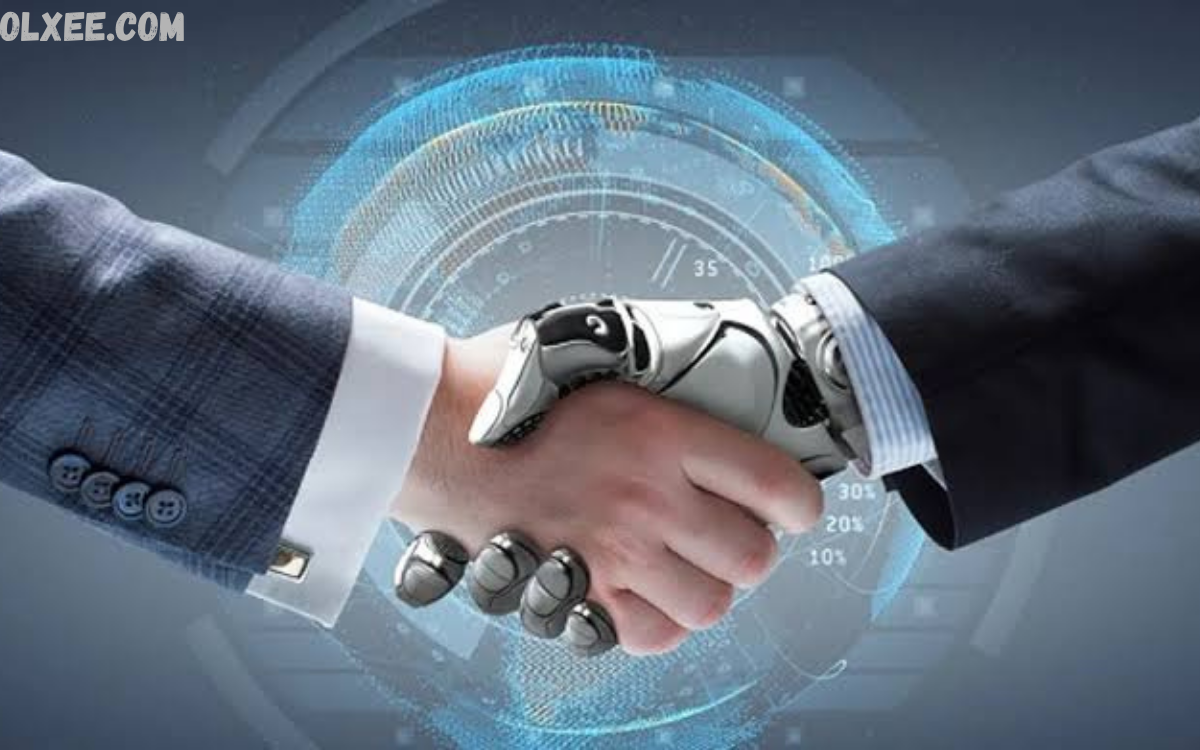
The Future of Artificial Intelligence is one of the most exciting and transformative topics of the 21st century. Artificial Intelligence (AI) has already revolutionized industries by enabling machines to perform tasks that once required human intelligence.
The future of artificial intelligence extends beyond automation. It promises intelligent collaboration between humans and machines, enabling faster decision-making, personalized experiences, scientific breakthroughs, and innovative solutions to global challenges.
What Is Artificial Intelligence?
Artificial Intelligence refers to computer systems designed to simulate human intelligence by learning from data, recognizing patterns, solving problems, making decisions, and improving performance over time. AI combines multiple technologies, including machine learning, deep learning, natural language processing, robotics, and computer vision.
Unlike traditional software that follows fixed rules, AI systems continuously learn from experience, making them more adaptable and capable of handling complex tasks. This ability positions AI as one of the most influential technologies shaping the future.
Why the Future of Artificial Intelligence Matters?
The future of artificial intelligence matters because AI has the potential to improve productivity, increase efficiency, reduce costs, and enhance innovation across industries. Organizations worldwide are investing billions of dollars in AI research and development to gain competitive advantages.
Several factors contribute to AI’s growing importance:
- Increasing availability of big data
- Powerful cloud computing infrastructure
- Advanced machine learning algorithms
- Improved processing capabilities
- Growing demand for automation
- Expansion of digital transformation initiatives
As these technologies mature, AI will become even more capable of solving complex real-world problems.
AI in Healthcare
Healthcare is expected to experience one of the most significant transformations through artificial intelligence. Future AI systems will support physicians by improving diagnostic accuracy, predicting diseases before symptoms appear, and recommending personalized treatment plans.
AI-powered healthcare applications may include:
- Early disease detection
- Medical imaging analysis
- Drug discovery acceleration
- Personalized medicine
- Virtual health assistants
- Robotic surgeries
- Remote patient monitoring
These innovations could reduce healthcare costs while improving patient outcomes and expanding access to quality medical services worldwide.
AI in Education
The future of artificial intelligence will redefine education by creating personalized learning experiences. AI-powered educational platforms will adapt lessons according to each student’s learning style, strengths, and weaknesses.
Future educational applications include:
- Intelligent tutoring systems
- Automated grading
- Personalized learning paths
- Language translation tools
- Virtual classrooms
- AI teaching assistants
- Predictive student performance analysis
Teachers will benefit from reduced administrative workloads, allowing them to focus more on mentoring and student engagement.
AI in Business
Businesses are rapidly adopting AI to improve operational efficiency and customer satisfaction. The future of artificial intelligence in business includes intelligent automation, predictive analytics, customer personalization, and strategic decision-making.
Organizations will increasingly use AI for:
- Customer service chatbots
- Marketing optimization
- Supply chain management
- Fraud detection
- Financial forecasting
- Human resource recruitment
- Sales prediction
Companies that effectively integrate AI into their operations are likely to achieve higher productivity and stronger competitive positions.
AI and Automation
Automation represents one of AI’s most impactful applications. Intelligent automation goes beyond repetitive tasks by enabling machines to analyze information, make decisions, and continuously improve performance.
Industries benefiting from AI automation include:
- Manufacturing
- Banking
- Logistics
- Retail
- Telecommunications
- Insurance
- Energy
Although automation may replace certain routine jobs, it will also create new career opportunities in AI development, cybersecurity, data science, robotics, and digital transformation.
AI in Transportation
Transportation is undergoing rapid innovation through the use of artificial intelligence. Autonomous vehicles, intelligent traffic management systems, and predictive maintenance solutions are becoming increasingly sophisticated.
Future transportation advancements may include:
- Self-driving cars
- Smart traffic control
- AI-powered logistics
- Drone deliveries
- Predictive vehicle maintenance
- Intelligent navigation systems
These innovations aim to improve road safety, reduce congestion, lower fuel consumption, and optimize transportation networks.
AI in Manufacturing
Smart manufacturing powered by AI will increase productivity while reducing operational costs. AI systems will monitor production lines, predict equipment failures, optimize inventory, and improve product quality.
Manufacturers will benefit from:
- Predictive maintenance
- Quality inspection automation
- Smart robotics
- Production optimization
- Supply chain intelligence
- Energy efficiency
The future factory will rely heavily on intelligent machines working alongside human employees.
AI and Cybersecurity
As cyber threats become increasingly sophisticated, artificial intelligence will play a vital role in cybersecurity. AI systems can detect unusual behavior, identify vulnerabilities, and respond to threats in real time.
Future cybersecurity applications include:
- Automated threat detection
- Malware analysis
- Identity verification
- Fraud prevention
- Network monitoring
- Risk assessment
Organizations will increasingly depend on AI to protect sensitive data and digital infrastructure.
AI in Finance
Financial institutions are leveraging AI to improve customer service, reduce fraud, automate compliance, and optimize investment strategies.
Future financial applications include:
- Intelligent investment advisors
- Credit risk assessment
- Algorithmic trading
- Fraud detection
- Personalized banking
- Financial forecasting
AI will help financial organizations make faster and more accurate decisions while enhancing customer experiences.
Read Also: AI for Content Creation: Transforming the Future of Digital Content
Artificial Intelligence and Smart Cities
The future of artificial intelligence will significantly influence urban development. Smart cities will use AI to optimize transportation, energy management, waste collection, public safety, and environmental monitoring.
AI-powered smart city technologies may include:
- Intelligent traffic systems
- Smart energy grids
- Automated public transportation
- Air quality monitoring
- Predictive infrastructure maintenance
- Emergency response optimization
These innovations will contribute to more sustainable and efficient urban environments.
The Role of Machine Learning
Machine learning remains one of the driving forces behind AI innovation. Future machine learning models will become more accurate, more efficient, and better able to handle increasingly complex tasks with minimal human intervention.
Advancements in machine learning will support innovations across healthcare, finance, education, agriculture, manufacturing, and scientific research.
Generative Artificial Intelligence
Generative AI represents one of the fastest-growing areas within artificial intelligence. Future generative AI systems will create high-quality text, images, videos, software code, music, and digital content with remarkable accuracy.
Businesses will increasingly use generative AI for:
- Content creation
- Software development
- Marketing campaigns
- Product design
- Customer support
- Knowledge management
Generative AI is expected to significantly increase productivity while opening new creative possibilities.
Ethical Challenges of Artificial Intelligence
Despite its enormous benefits, the future of artificial intelligence also presents ethical concerns that require careful consideration.
Major ethical challenges include:
- Data privacy
- Algorithmic bias
- Job displacement
- Security risks
- Transparency
- Accountability
- Responsible AI governance
Governments, technology companies, researchers, and policymakers must collaborate to establish ethical standards that ensure AI benefits society while minimizing potential risks.
AI and Employment
One of the most discussed aspects of the future of artificial intelligence is its impact on employment. While AI may automate repetitive jobs, it will also generate entirely new professions requiring advanced technical and analytical skills.
Future careers may include:
- AI engineers
- Machine learning specialists
- AI ethics consultants
- Robotics technicians
- Data scientists
- Prompt engineers
- AI auditors
Continuous learning and skill development will become increasingly important in an AI-driven economy.
Artificial Intelligence in Scientific Research
AI is accelerating scientific discoveries by analyzing enormous datasets, identifying hidden patterns, and assisting researchers with complex simulations.
Future research applications include:
- Climate modeling
- Space exploration
- Drug development
- Genomics
- Materials science
- Renewable energy research
AI will help scientists solve problems that were previously impossible using conventional computing methods.
Future Trends in Artificial Intelligence
Several emerging trends are expected to define the future of artificial intelligence:
- Explainable AI
- Human-AI collaboration
- Edge AI
- Autonomous robotics
- AI-powered healthcare
- Quantum AI
- Multimodal AI systems
- Responsible AI development
- AI regulation
- Sustainable AI technologies
These innovations will shape how AI integrates into society over the coming decades.
Preparing for an AI-Driven Future
Individuals and organizations should proactively prepare for the continued advancement of artificial intelligence by investing in education, digital literacy, and technological innovation.
Recommended strategies include:
- Learning AI-related skills
- Promoting ethical AI practices
- Supporting lifelong learning
- Investing in digital infrastructure
- Encouraging responsible innovation
- Developing AI governance policies
Preparation will enable societies to maximize AI’s benefits while responsibly addressing its challenges.
Frequently Asked Questions
What is the future of artificial intelligence?
The future of artificial intelligence involves creating smarter systems capable of learning, reasoning, and solving complex problems across industries such as healthcare, education, finance, manufacturing, and transportation. AI is expected to become more efficient, ethical, and integrated into everyday life.
How will artificial intelligence change the workplace?
Artificial intelligence will automate repetitive tasks, improve productivity, enhance decision-making, and create new career opportunities in fields like data science, machine learning, robotics, and AI development. Human workers will increasingly collaborate with intelligent systems rather than compete against them.
Which industries will benefit the most from artificial intelligence?
Healthcare, finance, education, manufacturing, retail, transportation, agriculture, and cybersecurity are among the industries expected to benefit significantly from AI-powered automation, predictive analytics, and intelligent decision-making.
Can artificial intelligence replace human intelligence?
Artificial intelligence can perform specific tasks faster and more accurately than humans in many situations, but it cannot fully replace human creativity, emotional intelligence, ethical judgment, and complex reasoning. AI is more likely to complement human capabilities than replace them entirely.
What are the biggest challenges facing artificial intelligence?
Key challenges include data privacy, cybersecurity risks, algorithmic bias, ethical concerns, regulatory compliance, transparency, and the impact of automation on employment. Addressing these issues is essential for responsible AI development.
Is artificial intelligence safe for society?
Artificial intelligence can be safe when developed responsibly with proper regulations, transparency, human oversight, and ethical guidelines. Governments, businesses, and researchers must work together to minimize risks while maximizing AI’s benefits.
How can businesses prepare for the future of artificial intelligence?
Businesses should invest in AI technologies, train employees in digital skills, adopt responsible AI practices, improve data management, and integrate AI into their long-term innovation and business strategies.
What is the long-term outlook for artificial intelligence?
The long-term outlook for artificial intelligence is highly promising. AI is expected to drive innovation, improve global productivity, accelerate scientific discoveries, enhance personalized services, and play a central role in solving many of the world’s most complex challenges.
Conclusion
The Future of Artificial Intelligence promises unprecedented innovation across every major industry. AI will continue transforming healthcare, education, transportation, manufacturing, finance, cybersecurity, and scientific research while improving productivity, efficiency, and decision-making.
However, realizing AI’s full potential requires responsible development, ethical governance, transparent algorithms, and continuous investment in education and workforce development. Organizations that embrace AI strategically while prioritizing human values will be best positioned to thrive in the digital era.
