

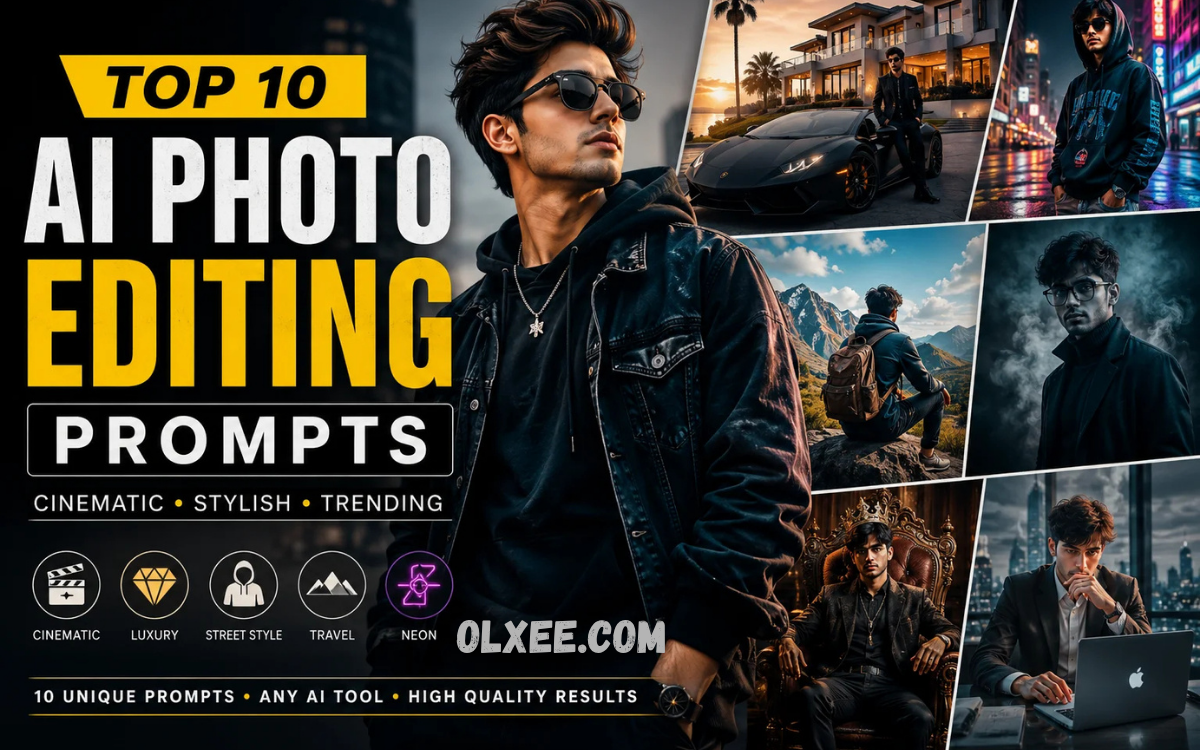
Artificial intelligence has transformed photo editing from a complex skill into an accessible creative process. In 2026, AI photo editing tools will allow users to generate professional-quality edits, artistic transformations, cinematic effects, and social media-ready visuals simply by describing what they want.
Whether you’re a content creator, photographer, marketer, designer, or casual user, understanding how to write powerful prompts can dramatically improve the quality of AI-generated edits. This guide explores the best AI photo editing prompts, practical examples, and the viral trends shaping visual content in 2026.
What Are AI Photo Editing Prompts?
AI photo editing prompts are text instructions that tell an AI tool how to modify, enhance, or transform an image. Instead of manually adjusting colors, lighting, backgrounds, or effects, users describe the desired outcome using natural language.
Modern AI editing systems can interpret detailed requests involving style, composition, mood, lighting, camera settings, textures, and artistic influences. The more specific and structured the prompt, the more accurate and visually appealing the final result tends to be.
Why AI Photo Editing Prompts Matter in 2026?
As AI image technology continues to evolve, prompt quality has become one of the most important factors affecting image results. A well-written prompt provides clear creative direction and reduces the need for repeated editing attempts.
In 2026, businesses, influencers, and creators increasingly rely on AI-enhanced visuals to improve engagement, branding, and the speed of content production. Effective prompts help maintain consistency while producing high-quality visuals that align with specific goals and audiences.
How to Write Better AI Photo Editing Prompts?
The most successful prompts typically include details about the subject, lighting, environment, style, color palette, mood, and desired output quality. Combining these elements gives the AI more context and improves the accuracy of generated edits.
A useful prompt formula is:
Subject + Style + Lighting + Background + Mood + Quality Details
For example:
“Transform this portrait into a cinematic movie scene with dramatic lighting, shallow depth of field, golden-hour atmosphere, ultra-realistic details, and professional color grading.”
This structure helps produce predictable, visually impressive results across various AI editing platforms.
Best AI Photo Editing Prompt Ideas
Portrait editing remains one of the most popular AI applications. Users often seek professional-quality enhancements that improve lighting, skin tones, and overall visual appeal while maintaining realism.
Example prompts include:
- Create a professional studio portrait with soft lighting and natural skin tones.
- Add cinematic lighting with dramatic shadows and film-style color grading.
- Convert the portrait into a luxury magazine cover photo shoot.
- Enhance facial details while preserving natural appearance.
- Apply high-end fashion photography aesthetics.
Landscape and travel photography also benefit greatly from AI-powered enhancements. These prompts can transform ordinary photos into breathtaking visual experiences.
Examples include:
- Turn this landscape into a vibrant sunrise scene with realistic lighting.
- Enhance colors and details while maintaining a natural look.
- Add dramatic storm clouds and cinematic atmosphere.
- Create a fantasy-inspired environment with glowing elements.
- Convert the image into a National Geographic-style photograph.
AI Photo Editing Prompts for Social Media Content
Social media creators constantly seek eye-catching visuals that stand out in crowded feeds. AI photo editing tools can quickly generate engaging content tailored for platforms such as Instagram, TikTok, YouTube, and emerging social networks.
Popular social media prompts focus on vibrant colors, dynamic compositions, trending aesthetics, and professional branding elements. These edits often prioritize visual impact and audience engagement while remaining authentic and visually balanced.
Examples:
- Create a modern influencer-style portrait with vibrant colors and soft glow.
- Add trendy neon lighting effects and futuristic city backgrounds.
- Transform this image into a luxury lifestyle photoshoot.
- Apply premium social media color grading and sharp details.
- Create a viral aesthetic with cinematic depth and dramatic lighting.
Professional AI Editing Prompts for Businesses
Businesses increasingly use AI photo editing to improve marketing materials, advertisements, and brand visuals. Professional prompts help maintain consistency while reducing editing costs and production time.
Corporate and commercial imagery often benefits from clean compositions, realistic enhancements, and polished visual presentation. The goal is typically to communicate professionalism and trust while supporting brand identity.
Read Also: Top AI Photo Editors for High-Quality Image Enhancement
Examples:
- Create a professional corporate headshot with clean studio lighting.
- Enhance product details for a premium e-commerce presentation.
- Generate luxury advertising-style visuals with realistic reflections.
- Improve image clarity while maintaining authentic colors.
- Create professional branding photography with modern aesthetics.
Creative and Artistic AI Photo Editing Prompts
AI technology has opened new possibilities for artistic experimentation. Users can transform ordinary images into unique visual experiences inspired by various artistic styles and creative concepts.
Artistic prompts often combine imaginative environments, unconventional color palettes, and distinctive visual storytelling techniques. These edits can help photographers and creators develop original content that captures audience attention.
Examples:
- Transform this photo into a surreal dreamscape with floating elements.
- Convert the image into a digital painting with rich textures.
- Create a cyberpunk-inspired city scene with neon lighting.
- Add fantasy castle backgrounds and magical visual effects.
- Turn the image into a cinematic science fiction poster.
Viral AI Photo Editing Trends in 2026
The AI editing landscape continues to evolve rapidly, with several trends dominating social media and digital content creation throughout 2026. Many of these trends focus on hyper-realistic transformations and immersive visual storytelling.
Creators are increasingly blending photography with AI-generated artistic elements, resulting in highly engaging and shareable content. These trends demonstrate how AI is reshaping creative workflows across industries.
Cinematic Movie Poster Effects
Movie-poster-style edits remain extremely popular. Users transform portraits into dramatic cinematic scenes featuring professional lighting, dynamic compositions, and blockbuster-inspired aesthetics.
These edits often include dramatic color grading, atmospheric effects, realistic shadows, and premium visual quality that resembles professional film marketing materials.
AI Time Travel Transformations
Time-travel editing allows users to place themselves in different historical eras or futuristic settings. From medieval kingdoms to advanced sci-fi cities, these transformations have become widely shared across social media platforms.
The trend appeals to audiences because it combines personal imagery with imaginative storytelling, creating visually unique and entertaining content.
Hyper-Realistic Fantasy Worlds
Fantasy-themed edits continue to attract attention due to advances in AI image realism. Users can seamlessly integrate magical environments, mythical creatures, and epic landscapes into existing photographs.
The realism achieved by modern AI tools makes these fantasy edits increasingly believable and immersive, driving significant online engagement.
Luxury Lifestyle Visuals
Luxury aesthetics remain a dominant trend among influencers, entrepreneurs, and brands. AI editing enables users to create premium visual experiences featuring elegant environments, sophisticated color palettes, and polished photography styles.
These edits are particularly effective for personal branding, marketing campaigns, and high-end social media content.
Common Mistakes to Avoid When Writing AI Photo Editing Prompts
Many users struggle with AI photo editing because their prompts are too vague or incomplete. Generic instructions often produce inconsistent results that fail to match expectations.
Adding specific details about lighting, mood, style, composition, and quality can significantly improve output quality. Clear instructions reduce ambiguity and help the AI understand the desired creative direction.
Another common mistake is including too many conflicting instructions within a single prompt. Combining numerous unrelated styles may confuse the AI and lead to visually inconsistent results.
Keeping prompts focused, structured, and purposeful typically produces stronger and more predictable outcomes.
Future of AI Photo Editing Prompts
The future of AI photo editing is moving toward greater personalization, contextual understanding, and creative control. Emerging systems can better interpret complex artistic directions while preserving image authenticity.
As AI models continue improving, users will likely gain access to more advanced editing capabilities, including real-time scene transformations, enhanced style consistency, and highly customized visual outputs tailored to individual preferences.
Prompt engineering is expected to remain an essential skill, helping creators maximize the potential of increasingly sophisticated AI editing tools.
Frequently Asked Questions
What are AI photo editing prompts?
AI photo editing prompts are written instructions that tell an AI system how to modify, enhance, or transform an image. They guide the AI in creating the desired visual result.
How can I improve my AI photo editing results?
Use detailed prompts that describe the subject, lighting, style, mood, background, and quality requirements. Specific instructions generally produce better outcomes.
Which types of photos work best with AI editing?
Portraits, landscapes, product photos, travel images, social media content, and marketing visuals often achieve excellent results with AI-assisted editing.
Are AI photo editing prompts suitable for professional use?
Yes. Many businesses, photographers, marketers, and content creators use AI editing tools to improve efficiency and enhance visual quality while maintaining professional standards.
What are the most popular AI editing trends in 2026?
Cinematic movie posters, luxury lifestyle aesthetics, fantasy world transformations, futuristic city scenes, and historical time-travel edits are among the most popular trends.
Can AI photo editing replace traditional photo editing?
AI can automate many editing tasks and accelerate workflows, but professional photographers and designers often combine AI tools with traditional editing techniques for maximum creative control.
Why are detailed prompts important?
Detailed prompts provide clearer instructions, helping AI systems understand the desired outcome more accurately and reducing the need for multiple revisions.
Conclusion
AI photo editing prompts have become a powerful tool for creators, businesses, and everyday users seeking professional-quality visual content. By understanding how to structure prompts effectively and leveraging the latest 2026 trends, users can produce stunning edits that stand out across social media.
The most successful prompts combine clarity, creativity, and specific visual instructions. Whether creating cinematic portraits, luxury lifestyle imagery, fantasy worlds, or professional branding photos, strong prompt writing remains the foundation of exceptional AI-generated results.
