

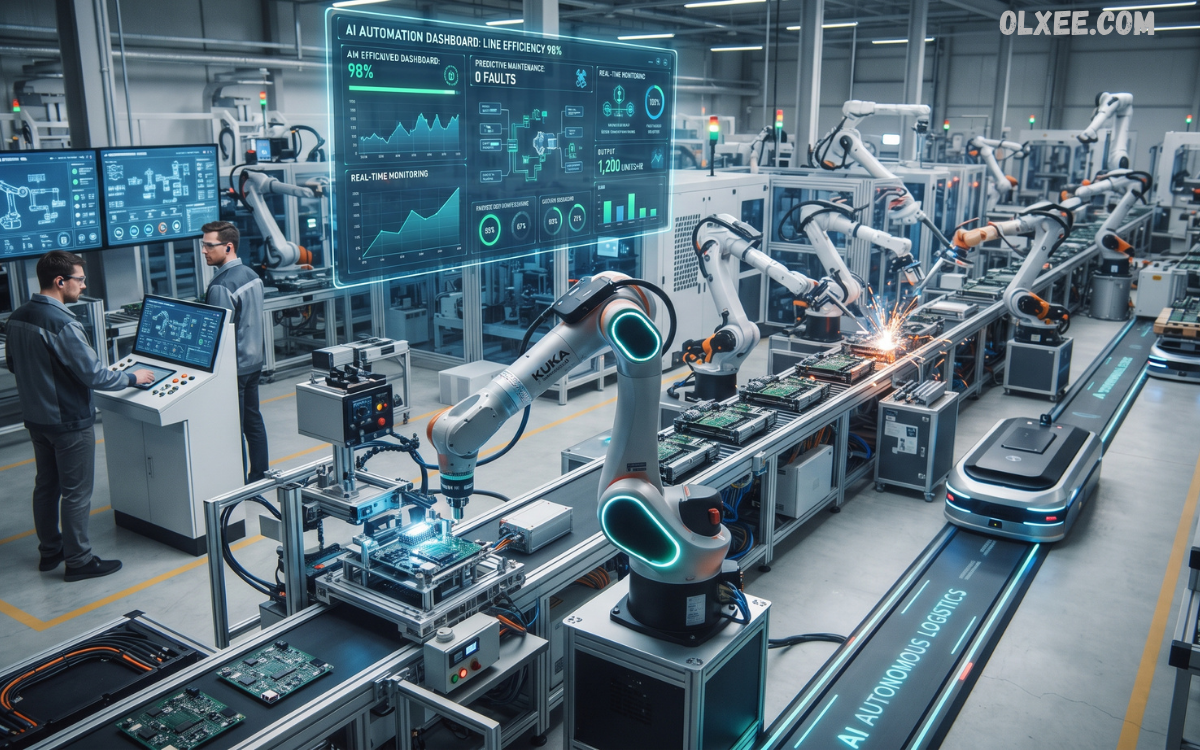
AI Automation has become one of the most influential technologies shaping modern businesses. Organizations across industries are using AI-powered systems to automate repetitive processes, improve operational efficiency, reduce costs, and deliver better customer experiences.
Businesses of every size are adopting AI automation to remain competitive in rapidly changing markets. From manufacturing and healthcare to finance, retail, education, and logistics, AI-driven solutions streamline workflows while allowing employees to focus on strategic and creative responsibilities.
What Is AI Automation?
AI Automation refers to the use of artificial intelligence technologies to automate tasks that traditionally required human intelligence. These systems analyze information, recognize patterns, learn from historical data, and continuously improve performance without requiring constant manual programming. AI Automation goes beyond basic rule-based software by adapting to changing environments and making intelligent recommendations.
Modern AI Automation integrates multiple technologies, including machine learning, deep learning, robotic process automation (RPA), natural language processing (NLP), speech recognition, predictive analytics, and computer vision. Together, these technologies create intelligent systems capable of processing complex workflows while minimizing human intervention and maximizing business efficiency.
Why Does AI Automation Matter?
Organizations face increasing pressure to improve productivity while reducing operational costs. AI Automation addresses these challenges by handling repetitive processes with speed, consistency, and precision. Employees spend less time performing routine administrative work and more time solving complex problems, developing innovative ideas, and building stronger customer relationships.
Another major advantage involves data-driven decision-making. AI Automation analyzes vast amounts of structured and unstructured information within seconds, identifying patterns that humans might overlook. Businesses can respond faster to market changes, customer demands, operational risks, and emerging opportunities while improving overall performance.
Key Technologies Behind AI Automation
Machine learning serves as the foundation of AI Automation by allowing systems to learn from historical data and improve predictions over time. Algorithms continuously adapt without requiring manual updates, making automation smarter with every interaction. This capability supports forecasting, recommendation engines, fraud detection, and predictive maintenance across multiple industries.
Natural language processing enables computers to understand, interpret, and generate human language. AI chatbots, virtual assistants, automated email responses, document processing, sentiment analysis, and multilingual customer support rely heavily on NLP. Computer vision adds another dimension by enabling machines to recognize images, videos, objects, faces, and manufacturing defects with remarkable accuracy.
Benefits of AI Automation
AI Automation significantly improves operational efficiency by eliminating repetitive manual tasks. Businesses reduce processing times while maintaining consistent quality across operations. Automated systems operate continuously without fatigue, allowing organizations to increase productivity day and night.
Cost savings represent another important advantage. AI Automation reduces labor-intensive work, minimizes costly human errors, optimizes resource allocation, and improves workflow management. Companies also gain better scalability because intelligent automation can manage growing workloads without requiring proportional increases in staffing or infrastructure.
AI Automation in Healthcare
Healthcare organizations increasingly depend on AI Automation to improve patient care and operational efficiency. Hospitals automate appointment scheduling, medical record management, diagnostic support, prescription verification, insurance processing, and patient communication. AI-powered systems assist doctors by analyzing medical images, identifying abnormalities, and recommending possible diagnoses.
Medical researchers also benefit from AI Automation through accelerated drug discovery, clinical trial analysis, genetic research, and predictive healthcare modeling. Healthcare providers deliver faster services while reducing administrative burdens, allowing professionals to dedicate more attention to patient treatment and personalized care.
AI Automation in Finance
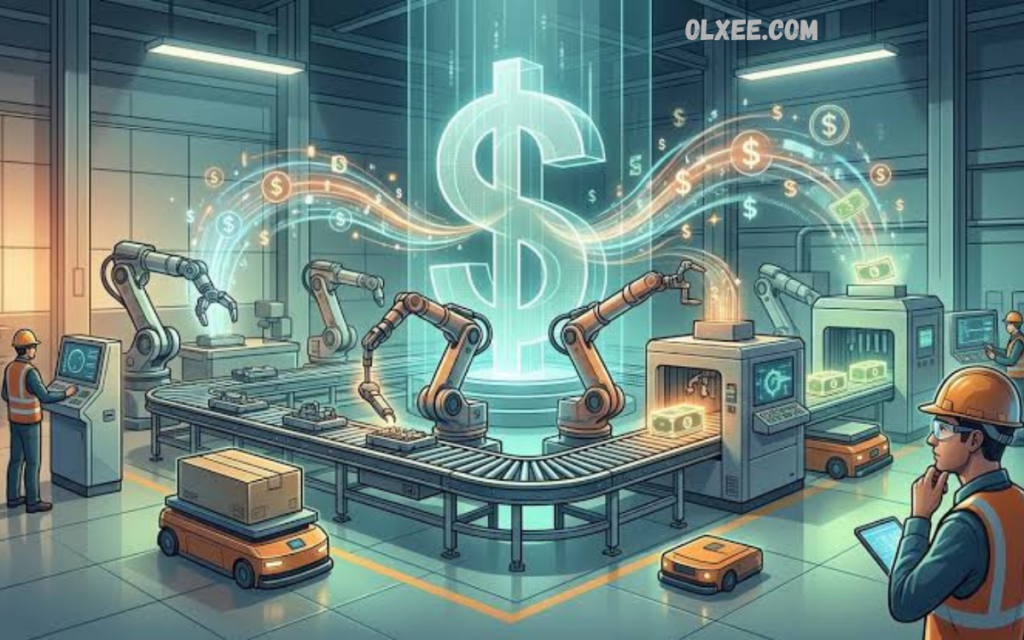
Financial institutions use AI Automation for fraud detection, risk assessment, regulatory compliance, algorithmic trading, customer service, loan processing, and investment management. Intelligent systems monitor millions of financial transactions in real time, detecting suspicious activities that require immediate attention.
Banks also employ AI Automation to streamline customer onboarding, automate document verification, process mortgage applications, and improve credit scoring. Personalized financial recommendations enhance customer satisfaction while reducing operational costs and strengthening regulatory compliance.
AI Automation in Manufacturing
Manufacturing companies leverage AI Automation to optimize production lines, improve quality control, predict equipment failures, and reduce downtime. Smart factories combine industrial robots, sensors, machine learning, and predictive maintenance to create highly efficient production environments.
Computer vision systems inspect manufactured products for defects faster than traditional manual inspection methods. AI Automation also improves inventory management, supply chain optimization, demand forecasting, and energy efficiency, helping manufacturers increase profitability while maintaining product quality.
Read Also: Social Media Marketing: Strategies for Business Growth
AI Automation in Retail and E-Commerce
Retail businesses rely on AI Automation to personalize shopping experiences, manage inventory, forecast demand, optimize pricing, and improve customer support. Recommendation engines analyze customer behavior and purchase history to suggest products that match individual preferences.
Warehouse automation, intelligent logistics, and AI-powered chatbots improve order fulfillment and customer satisfaction. Retailers also use predictive analytics to anticipate seasonal demand, optimize marketing campaigns, and reduce inventory waste while increasing sales opportunities.
AI Automation in Human Resources
Human resource departments increasingly implement AI Automation for recruitment, resume screening, employee onboarding, payroll processing, attendance tracking, performance analysis, and workforce planning. Automated recruitment platforms identify qualified candidates quickly, reducing hiring time while improving candidate selection.
Employee engagement also improves through AI-powered learning platforms, personalized training recommendations, automated surveys, and performance feedback systems. HR professionals spend less time on administrative work while focusing more on talent development and organizational growth.
Common AI Automation Tools
Businesses can choose from various AI Automation platforms depending on organizational needs. Popular solutions include robotic process automation software, AI-powered customer service platforms, workflow automation systems, predictive analytics platforms, document intelligence solutions, and intelligent business process management software.
Cloud computing providers offer integrated AI Automation services that simplify deployment and scalability. Organizations increasingly adopt no-code and low-code automation platforms, enabling non-technical employees to build intelligent workflows without extensive programming knowledge.
Challenges of AI Automation
Despite numerous benefits, AI Automation presents several implementation challenges. Data quality significantly affects AI performance because inaccurate or incomplete information produces unreliable results. Organizations must establish strong data governance policies before deploying automation systems.
Cybersecurity, privacy protection, ethical decision-making, regulatory compliance, and workforce adaptation also require careful planning. Employees may initially resist automation due to concerns about job displacement, making effective communication and continuous training essential for successful implementation.
Best Practices for Implementing AI Automation
Successful AI Automation begins with identifying repetitive, time-consuming, and high-volume processes suitable for automation. Organizations should establish measurable objectives, evaluate existing workflows, assess data readiness, and prioritize projects delivering immediate business value.
Continuous monitoring remains essential after implementation. Performance metrics, employee feedback, customer satisfaction, operational efficiency, and return on investment should guide ongoing improvements. Regular updates ensure AI Automation systems remain accurate, secure, and aligned with changing business requirements.
Future of AI Automation
The future of AI Automation promises even greater intelligence, adaptability, and collaboration between humans and machines. Generative AI, autonomous agents, advanced robotics, edge computing, quantum computing, and multimodal artificial intelligence will expand automation capabilities across virtually every industry.
Businesses investing in AI Automation today position themselves for long-term competitive advantages. Intelligent systems will increasingly support strategic decision-making, innovation, personalized customer experiences, predictive business operations, and sustainable growth in an increasingly digital economy.
Frequently Asked Questions
What is AI Automation?
AI Automation is the use of artificial intelligence technologies to automate tasks that normally require human intelligence. It combines machine learning, natural language processing, computer vision, and data analytics to improve efficiency, accuracy, and decision-making across business operations.
How does AI Automation differ from traditional automation?
Traditional automation follows fixed rules and predefined workflows, while AI Automation learns from data, adapts to changing situations, and makes intelligent decisions. This flexibility allows AI-powered systems to handle more complex and dynamic tasks.
Which industries benefit the most from AI Automation?
Healthcare, finance, manufacturing, retail, logistics, education, customer service, marketing, and information technology are among the industries that gain significant benefits from AI Automation through improved productivity and reduced operational costs.
Can small businesses use AI Automation?
Yes. Many affordable cloud-based AI Automation tools are designed specifically for small and medium-sized businesses. These solutions help automate customer support, marketing, accounting, scheduling, and administrative tasks without requiring large investments.
Does AI Automation replace human jobs?
AI Automation primarily handles repetitive and time-consuming tasks. While some job roles may change, it also creates new opportunities that require creativity, strategic thinking, problem-solving, and AI management skills.
What are the biggest advantages of AI Automation?
The main advantages include increased productivity, lower operating costs, improved accuracy, faster decision-making, better customer experiences, reduced human error, enhanced scalability, and the ability to analyze large volumes of data quickly.
What challenges come with AI Automation?
Common challenges include data privacy concerns, cybersecurity risks, implementation costs, employee training, integration with existing systems, and ensuring ethical use of artificial intelligence in business processes.
What tools are commonly used for AI Automation?
Organizations use AI-powered chatbots, robotic process automation software, workflow automation platforms, machine learning models, predictive analytics tools, intelligent document processing systems, and cloud-based AI services.
How can a company successfully implement AI Automation?
A successful implementation begins by identifying repetitive tasks, preparing high-quality data, selecting the right AI tools, training employees, monitoring performance, and continuously optimizing automated workflows based on business needs.
What is the future of AI Automation?
The future of AI Automation includes smarter decision-making, autonomous AI agents, advanced robotics, predictive business operations, personalized customer experiences, and deeper integration across industries, making businesses more efficient, innovative, and competitive.
Conclusion
AI Automation has evolved from a productivity tool into a strategic business capability that drives innovation, efficiency, and competitive advantage. Organizations implementing intelligent automation reduce operational costs, improve accuracy, accelerate decision-making, and create better customer experiences while empowering employees to focus on higher-value responsibilities.
As artificial intelligence technologies continue advancing, AI automation will become even more accessible, intelligent, and impactful. Businesses embracing responsible implementation, continuous learning, strong governance, and ethical AI practices will achieve sustainable growth while remaining competitive in the future digital landscape.
