

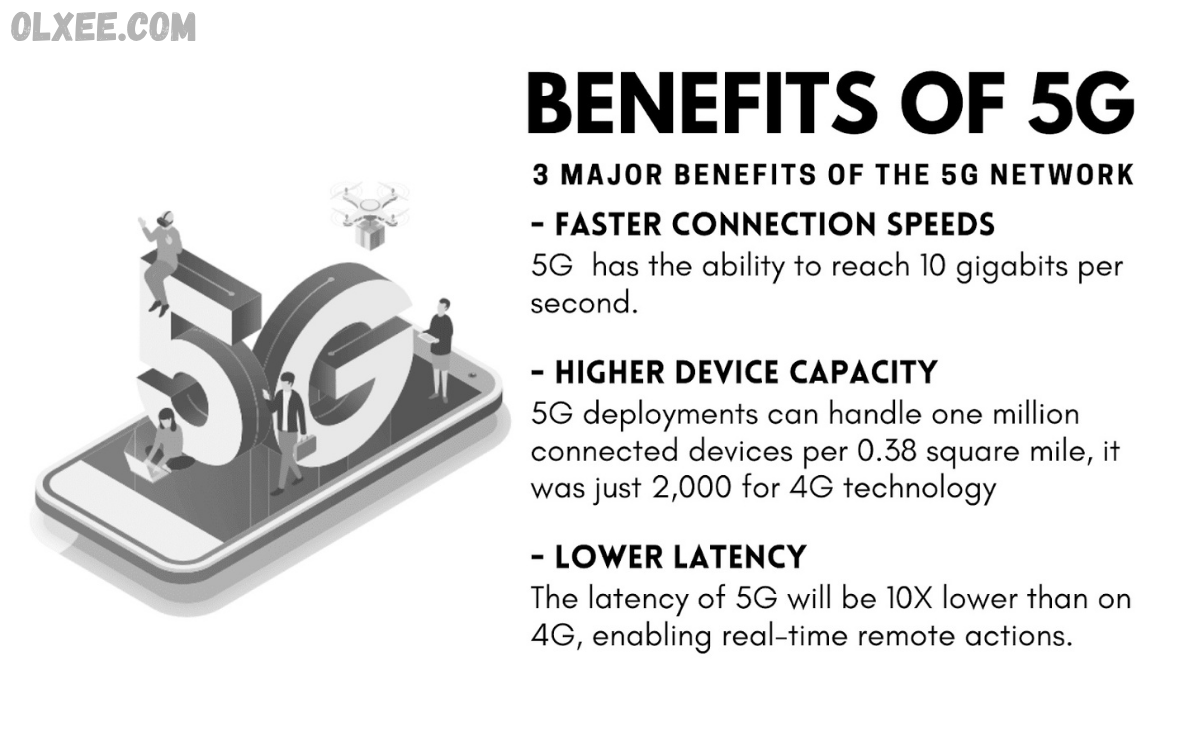
The rapid evolution of communication networks has transformed how businesses operate, collaborate, and deliver value. The arrival of fifth-generation wireless technology marks one of the most significant advancements in digital infrastructure.
Understanding the benefits of 5G technology has become essential for business leaders, IT professionals, engineers, healthcare providers, manufacturers, and decision-makers planning future digital transformation initiatives.
What Is 5G Technology?
5G represents the fifth generation of wireless communication standards designed to provide significantly faster data transmission, reduced latency, greater bandwidth, and improved network efficiency compared to 4G LTE.
The technology uses advanced radio frequencies, intelligent network management, beamforming, massive Multiple Input Multiple Output (MIMO), and network slicing to optimize performance for different applications.
These innovations enable businesses to support mission-critical operations while maintaining secure, reliable, and scalable communications.
Major 5G Technology Benefits
1. Exceptional Network Speed
One of the most recognized 5G Technology Benefits is dramatically increased internet speed.
Traditional networks often struggle during high-demand periods, leading to delays and reduced productivity. 5G enables download and upload speeds that significantly exceed previous wireless standards.
Faster connectivity allows organizations to:
- Transfer large business files quickly
- Stream ultra-high-definition video
- Conduct seamless virtual meetings
- Support cloud-based applications
- Improve employee productivity
- Accelerate software deployment
High-speed communication minimizes downtime while improving workflow efficiency across distributed teams.
2. Ultra-Low Latency
Latency measures the delay between sending and receiving information across a network.
One of the most valuable benefits of 5G technology is reduced latency to just a few milliseconds.
Low latency enables:
- Real-time collaboration
- Remote equipment control
- Autonomous systems
- Industrial automation
- Online gaming
- Augmented Reality
- Virtual Reality
- Smart manufacturing
For organizations requiring immediate response times, reduced latency improves operational accuracy and decision-making.
3. Greater Network Capacity
Modern businesses connect thousands of devices simultaneously.
Previous wireless technologies become congested when too many devices access the same network.
Among the leading benefits of 5G technology is significantly expanded network capacity.
Organizations can support:
- Smart offices
- Connected factories
- Retail sensors
- Security cameras
- Environmental monitoring
- Employee devices
- Customer devices
- Industrial equipment
Improved capacity ensures consistent performance even during periods of heavy network demand.
4. Improved Internet of Things (IoT)
The Internet of Things continues to expand across industries.
Smart devices collect valuable operational data while automating routine tasks.
One of the strongest benefits of 5G Technology is its support for massive IoT deployments.
Businesses can connect:
- Smart sensors
- Industrial robots
- Fleet vehicles
- Medical equipment
- Agricultural systems
- Utility infrastructure
- Smart buildings
Reliable connectivity enables continuous communication between devices, improving efficiency and operational visibility.
Read Also: iPhone – Complete Guide, Latest Models, Features, Prices & Buying Tips (2026)
5. Enhanced Business Productivity
Organizations continuously seek methods to increase productivity while reducing operational costs.
The advanced capabilities of 5G help employees work more efficiently, regardless of location.
Business productivity improves through:
- Faster application performance
- Reliable remote access
- Instant cloud synchronization
- Improved collaboration
- Reduced communication delays
- Better mobile connectivity
Employees spend less time waiting for systems and more time focusing on strategic work.
6. Better Support for Remote Work
Remote and hybrid work environments require stable, high-speed internet.
Among the practical 5G technology benefits is providing professionals with dependable mobile connectivity almost anywhere.
Employees can:
- Attend virtual meetings
- Access cloud applications
- Share large documents
- Collaborate in real time
- Connect securely to corporate systems
- Maintain productivity while traveling
Reliable mobile connectivity strengthens workforce flexibility.
7. Accelerated Cloud Computing
Cloud platforms continue to replace traditional on-premises infrastructure.
One of the important 5G Technology Benefits involves improving cloud application performance.
Organizations experience:
- Faster cloud access
- Reduced synchronization delays
- Better software responsiveness
- Efficient data storage
- Improved disaster recovery
- Enhanced scalability
Cloud adoption becomes more effective when supported by high-performance wireless networks.
8. Enabling Edge Computing
Edge computing processes information closer to where data is generated instead of sending everything to centralized servers.
This reduces latency while improving efficiency.
Combined with edge computing, 5G enables:
- Real-time analytics
- Industrial automation
- Smart transportation
- Predictive maintenance
- Intelligent surveillance
- Manufacturing optimization
Businesses receive immediate insights for faster operational decisions.
9. Smarter Manufacturing
Manufacturing organizations increasingly rely on automation and connected equipment.
Several 5G Technology Benefits directly support Industry 4.0 initiatives.
Applications include:
- Connected robots
- Automated quality inspection
- Predictive maintenance
- Digital twins
- Inventory monitoring
- Production optimization
Manufacturers improve efficiency while reducing operational costs and equipment downtime.
10. Healthcare Innovation
Healthcare providers increasingly depend on reliable communication systems.
5G enables significant improvements across medical services.
Healthcare applications include:
- Remote patient monitoring
- Connected medical devices
- Telemedicine
- Emergency response
- Medical imaging
- AI-assisted diagnostics
Healthcare professionals gain faster access to critical information while improving patient care.
11. Smart Cities
Governments worldwide continue investing in digital infrastructure.
One of the broader benefits of 5G technology is its support for smart city development.
Cities can deploy:
- Intelligent traffic management
- Smart lighting
- Environmental monitoring
- Public safety systems
- Connected transportation
- Waste management solutions
These technologies improve urban efficiency and quality of life.
12. Enhanced Customer Experience
Customer expectations continue to increase across every industry.
Businesses using 5G can deliver:
- Faster mobile services
- Personalized digital experiences
- Instant support
- Interactive applications
- Real-time recommendations
- Seamless online transactions
Improved customer experiences strengthen loyalty while increasing revenue opportunities.
13. Business Innovation
Organizations adopting advanced connectivity gain competitive advantages.
5G creates opportunities for:
- AI-powered services
- Autonomous vehicles
- Smart logistics
- Connected retail
- Digital healthcare
- Immersive experiences
Innovation accelerates as businesses develop new products and services supported by next-generation connectivity.
14. Improved Security Architecture
Although cybersecurity requires multiple protective measures, modern 5G networks introduce advanced security capabilities.
Businesses benefit from:
- Improved authentication
- Better encryption
- Network slicing
- Secure enterprise connectivity
- Enhanced identity management
Combined with robust cybersecurity strategies, these features improve overall network resilience.
15. Future-Proof Digital Infrastructure
Technology continues evolving rapidly.
Organizations investing in scalable communication infrastructure prepare themselves for future innovations.
Long-term 5G Technology Benefits include:
- Digital transformation readiness
- AI integration
- Automation support
- Intelligent analytics
- Expanded IoT ecosystems
- Sustainable business growth
Businesses gain flexibility while remaining competitive in changing markets.
Industries Benefiting from 5G
Multiple industries already experience measurable improvements through 5G adoption.
These include:
- Manufacturing
- Healthcare
- Finance
- Retail
- Transportation
- Logistics
- Agriculture
- Education
- Energy
- Telecommunications
- Media
- Government
Each sector leverages high-speed, reliable connectivity to improve operational efficiency and customer outcomes.
Challenges to Consider
Although the advantages are significant, organizations should evaluate implementation challenges before deployment.
Common considerations include:
- Infrastructure investment
- Device compatibility
- Network availability
- Cybersecurity planning
- Regulatory compliance
- Employee training
Strategic planning ensures successful implementation while maximizing return on investment.
Best Practices for Organizations
Professionals planning 5G adoption should:
- Assess business requirements.
- Identify high-value use cases.
- Upgrade compatible hardware.
- Strengthen cybersecurity policies.
- Invest in employee training.
- Monitor network performance.
- Integrate cloud and edge computing.
- Develop scalable deployment strategies.
These practices help organizations achieve sustainable digital transformation.
The Future of 5G Technology
The future of 5G extends beyond faster mobile internet. Continued advancements will enable intelligent automation, expanded AI applications, connected transportation, immersive virtual environments, industrial robotics, and next-generation communication services.
As network coverage expands globally, businesses will discover new methods to optimize operations, reduce costs, improve customer engagement, and generate innovative revenue streams. The integration of 5G with artificial intelligence, machine learning, cloud computing, blockchain, and edge computing will further reshape industries and create entirely new business models.
Frequently Asked Questions
What are the 5 main benefits of 5G technology?
The primary benefits of 5G technology include faster internet speeds, ultra-low latency, greater network capacity, improved connectivity for Internet of Things (IoT) devices, enhanced support for cloud computing, and better performance for business applications.
How is 5G different from 4G?
5G offers significantly higher data speeds, lower latency, increased reliability, and the ability to connect many more devices simultaneously than 4G. These improvements make it ideal for advanced technologies such as artificial intelligence, autonomous vehicles, and smart cities.
Which industries benefit the most from 5G technology?
Industries including healthcare, manufacturing, transportation, retail, education, finance, agriculture, logistics, and telecommunications benefit greatly from 5G by improving operational efficiency, automation, and customer experiences.
Is 5G technology safe for businesses?
Yes. 5G networks are built with advanced security features such as stronger encryption, improved authentication, and network slicing. Organizations should still implement comprehensive cybersecurity measures to protect their systems and data.
How does 5G improve remote work?
5G provides faster, more reliable internet connections that support video conferencing, cloud-based applications, real-time collaboration, and secure remote access, helping employees remain productive from virtually any location.
What role does 5G play in the Internet of Things (IoT)?
5G enables businesses to connect a massive number of IoT devices with minimal latency and improved reliability. This supports smart factories, connected healthcare devices, intelligent transportation systems, and automated industrial operations.
Can small businesses benefit from 5G technology?
Yes. Small businesses can use 5G to improve communication, enhance customer service, adopt cloud solutions, support remote employees, and reduce operational inefficiencies without requiring extensive wired infrastructure.
Does 5G support artificial intelligence and automation?
Yes. The high-speed, low-latency nature of 5G makes it an ideal foundation for artificial intelligence, machine learning, robotics, predictive analytics, and automated business processes that require real-time data processing.
What is the future of 5G technology?
The future of 5G includes broader global coverage, deeper integration with artificial intelligence, edge computing, smart cities, autonomous transportation, and advanced industrial automation. As adoption grows, 5G will continue to drive innovation and digital transformation across industries.
Conclusion
The importance of 5G technology benefits continues to grow as organizations pursue greater efficiency, innovation, and competitiveness. Faster speeds, ultra-low latency, improved network capacity, enhanced IoT connectivity, cloud optimization, and intelligent automation make 5G a foundational technology for modern enterprises.
Professionals across every industry should view 5G as more than a telecommunications upgrade. It represents a strategic platform that enables digital transformation, supports emerging technologies, and prepares organizations for future innovation.
